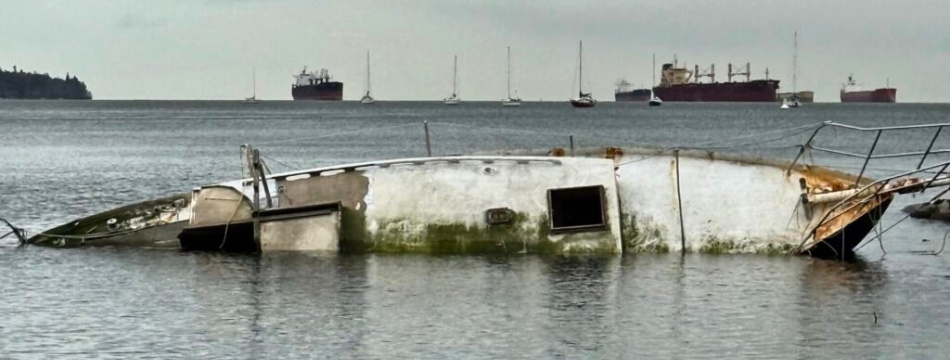
Derelict vessels are neglected boats that are often found abandoned or wrecked and are left to decay in the water or on the shore. These vessels pose serious environmental and safety risks, leaking harmful substances such as oil, fuels, paints, batteries, fiberglass and plastics that threaten marine life and habitats. They also endanger mariners, beachgoers, and shoreline infrastructure.
Do you have a retirement plan for your boat?
When your vessel reaches the end of its life, retire it responsibly to protect the Salish Sea, coastal communities, and food security.
 Keeping It Clean: Tips for Responsible Boat Disposal
- If you decide to dismantle a boat yourself, ideally do so at a Clean Marine BC certified boatyard, ensuring all waste is contained and pollutants are prevented from entering the environment.
- Remove and dispose of all hazardous materials safely and properly.
- Recycle, repurpose, or sell as many boat components as possible.
- Once hazardous materials and reusable parts are removed, send the remaining materials to a landfill.
- If you hire a disposal company, choose a reputable business that completes the job in an environmentally responsible manner.
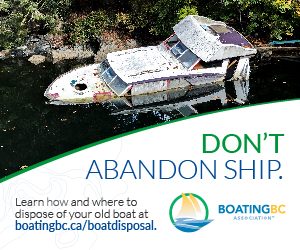
Learn more on how and where to dispose of your old boat at boatingbc.ca/boatdisposal.
Additionally, if you do not have the resources to repair, maintain, or operate a vessel, never take a “free” boat—it will likely become more trouble than it is worth.
IMMEDIATE ACTION: HOW TO REPORT A DERELICT VESSEL
-
- Emergency threat: If a vessel poses an immediate and serious threat to public safety (due to fire, explosion, or suspicious activity), call local police or emergency services at 9-1-1 and keep clear of the vessel.
- Environmental or community risk: If a vessel appears abandoned or is in poor condition and could harm the environment or community health if it sinks, report it to the Canadian Coast Guard at 1-800-889-8852.
- Further learn more about how to report a problem vessel here.
Strengthening Accountability: Patrick Weiler’s Clean Coasts Act (Bill C‑244)
Patrick Weiler’s Clean Coasts Act (Bill C‑244) is a private member’s bill currently before Parliament that proposes targeted amendments to strengthen Canada’s ability to prevent and respond to marine pollution. The bill would update both the Canadian Environmental Protection Act, 1999 and the Wrecked, Abandoned or Hazardous Vessels Act to close long‑standing gaps that coastal communities—especially in British Columbia—have been calling out for years.
Bill C‑244 focuses on two major improvements:
- Clarifying that marine dumping is a strict liability offence, ensuring polluters can be held accountable without requiring proof of intent.
- Prohibiting vessel owners from transferring a boat to someone who lacks the ability, resources, or intent to maintain or dispose of it safely, a common tactic used to avoid disposal costs and a major driver of derelict vessels on BC’s coast.
The bill has advanced through second reading and is now under committee consideration in the House of Commons.
Together, these measures aim to strengthen accountability, reduce the number of vessels that become abandoned or hazardous, and better protect marine ecosystems and coastal communities from preventable pollution.
POLICY CHANGE: WE NEED MORE SOLUTIONS FOR VESSEL ABANDONMENT!
Bill C-344, An Act to amend the Wrecked, Abandoned or Hazardous Vessels Act, was introduced in Parliament in June 2023. While it was a step in the right direction, it did not advance beyond First Reading before the parliamentary session ended in early 2025.
Even if Bill C-344 had passed, gaps would have remained in addressing the environmental and safety risks posed by abandoned and hazardous vessels in Canadian waters. Moving forward, any new legislation or reintroduction of Bill C-344 must push for a stronger, more comprehensive approach.
One major challenge is that many vessels lack clear or current ownership records, making it difficult to identify and hold responsible parties accountable.
Additional resources are needed to enforce existing laws and to support planning and long-term solutions, including:
- Innovative vessel recycling programs
- Creation of a designated vessel turn-in program
Effective action also requires strong collaboration between the federal government, provincial governments, and Indigenous governing bodies. Bill C-344 recognized the importance of this cooperation, which should serve as a foundation for future efforts.
Addressing vessel abandonment must remain a national priority. With the right tools, funding, and partnerships, Canada can reduce the risks these derelict vessels pose to marine ecosystems, coastal communities, and the environment.
Take action: Send a letter to your Member of Parliament to support stronger vessel management legislation.
The Wrecked, Abandoned, or Hazardous Vessels Act
This Act came into force on July 30, 2019. Below is a brief overview of the key elements of the bill:
Strengthening vessel owner liability
The Act incorporates the Nairobi International Convention on the Removal of Wrecks, 2007 into Canadian law and extends its provisions across all Canadian waters. This international treaty establishes rules for the prompt and effective removal of shipwrecks that may pose hazards to navigation or the marine environment.
Under the Act, vessel owners have new responsibilities to report, locate, mark, and remove wrecks. They are automatically liable for the costs of removing hazardous wrecks caused by maritime incidents. Owners of vessels 300 gross tons or larger must maintain insurance or other financial security to cover removal costs when a wreck poses a hazard.
Addressing Irresponsible Vessel Management
- Abandoning their vessels
- Allowing their vessels to become wrecks through neglect or failure to maintain them
- Intentionally sinking, stranding, or grounding their vessels
- Leaving vessels in poor condition in the same area (within a radius of three nautical miles) for more than 60 days without authorization
- Leaving vessels adrift for more than 48 hours without taking appropriate measures to secure them
Empowering the federal government
Overall, the Wrecked, Abandoned, and Hazardous Vessels Act empowers the Canadian federal government to take proactive measures to prevent, mitigate, or eliminate hazards posed by vessels or wrecks. This includes directing vessel owners to take necessary actions and holding them accountable for any non-compliance.
Learn more about the Wrecked, Abandoned or Hazardous Vessels Act.
Shipbreaking and Ship Recycling in B.C.
As more vessels reach the end of their life, coastal communities are increasingly facing the impacts of poorly managed ship dismantling. Shipbreaking — the process of taking apart large vessels for disposal or recycling — can release oils, heavy metals, asbestos, plastics, and other contaminants if it occurs on open shorelines without proper containment. These risks are especially acute in ecologically sensitive areas like Baynes Sound.
Why Shipbreaking Matters for Baynes Sound
A new proposal by Coastal Gateway Port would re‑establish ship dismantling activities on the former Deep Water Recovery site in Union Bay. CGP is closely tied to Deep Water Recovery, which previously operated a shipbreaking yard on the same foreshore. The proposal builds directly on DWR’s past dismantling work, even as the company faces a long record of pollution findings and non‑compliance.
In July 2025, the Province terminated DWR’s foreshore lease after the company failed to meet the requirements of a Pollution Abatement Order. These unresolved issues form an important backdrop to the new proposal and highlight why communities are calling for stronger oversight, transparent review, and fully contained ship‑recycling facilities rather than shoreline dismantling.
A coalition of coastal community and environmental organizations — including ADIMS, the B.C. Shellfish Growers Association, Concerned Citizens of Baynes Sound, the David Suzuki Foundation, Stand.Earth, and West Coast Environmental Law — has urged the Province to ensure rigorous review and protection of Baynes Sound’s ecological, cultural, and economic values. [Link: Coalition letter]
A Safer Path: Contained Ship‑Recycling Facilities
Many experts and community leaders have pointed to the need for purpose‑built, fully contained ship‑recycling facilities in B.C. These facilities use impermeable surfaces, stormwater controls, hazardous‑materials management, and industrial‑scale equipment to safely dismantle vessels without releasing contaminants into the marine environment.
Port Alberni: A Proposed Model for Responsible Ship Recycling
MP Gord Johns and MLA Josie Osborne have highlighted Port Alberni as a potential location for a modern, contained ship‑recycling facility. Their work emphasizes:
- Proper environmental controls
- Adequate industrial space
- Collaboration with local and Indigenous communities
- Alignment with international best practices
This model is frequently referenced as a safer alternative to shoreline dismantling in sensitive areas like Baynes Sound.
Federal Action on Ship Recycling
MP Gord Johns has also introduced federal legislation aimed at strengthening Canada’s approach to derelict and end‑of‑life vessels. His work calls for:
- Making responsible ship recycling part of Canada’s national marine strategy
- Developing modern, contained facilities to manage vessels safely within Canada
- Ensuring strong environmental and labour standards
- Working with First Nations and coastal communities
- Preparing for the retirement of several federal vessels in the coming years
These efforts reflect growing recognition that Canada must be ready not only to build ships, but to retire them responsibly.
PROTECTING OUR WATERS FROM DERELICT VESSELS
Abandoned, derelict, and hazardous vessels pose serious risks to Canada’s marine environments, coastal communities, and public safety. While current laws like the Wrecked, Abandoned, or Hazardous Vessels Act provide a foundation for action, significant challenges remain, especially around accountability and resources for removal and recycling.
Addressing this growing problem requires stronger legislation, better enforcement, innovative solutions, and meaningful collaboration between all levels of government and Indigenous partners. Boat owners and the public all have a role to play in preventing vessel abandonment and protecting our waters.
Together, with the right tools, funding, and partnerships, Canada can safeguard its coasts for future generations. Take action today by staying informed, reporting problem vessels, and supporting policies that promote responsible vessel management.