
Prime Minister Mark Carney announced measures to protect Canada’s oceans. This comes during a time of rapid change to the regulatory, legislative, and legal framework this country operates within when it comes to approving major projects, engaging in meaningful Indigenous consultation, utilizing environmental protection, and how we navigate democratic processes.
In the last year alone, the Government has introduced sweeping changes that risk rolling back decades of progress on environmental protection, community well-being, species protection, and democratic oversight of government actions. This includes Bill C-5 and the newly introduced Bill C-39, which would reshape how major projects are assessed and advanced in the ‘national interest’, grant governments incredible powers to override their own laws and regulations (such as the Species at Risk Act), as well as dramatically weaken worker protections.
Perhaps most concerning, we are seeing a government use their definition of “National interest” as a blunt-force instrument to smash any laws, regulations, or processes that get in the way of industry, environmental or civic pushback be damned. This is not a sign of a flourishing democracy.
Ocean protection in the context of rapid industrial development
The measures that Carney announced Tuesday, while advancing some much needed action that organizations like ours have been pushing for for years, are ultimately insufficient to protect the Southern Resident killer whales (SRKW) and the species that call the Salish Sea home from both the baseline conditions of the last decade, as well as the increasing industrial and legislative onslaught this bioregion is facing now and into the future.
What’s more, the timing of this announcement, one working day ahead of declaring the West Coast Pipeline a Project of National Interest, cannot be coincidence. The Federal government wants to show that they take ocean conservation seriously by waving promises of billions of dollars in support of our marine ecosystems, but an analysis of these promises show there is little meaningful substance behind them, especially in the context of major project announcements like Roberts Bank Terminal 2 (RBT2) and the aforementioned pipeline, both of which will prove to be catastrophic for the SRKW and the health of the Salish Sea as a whole if they proceed.
In short, many of these measures are welcome, but we are living in a different, more complex, and dangerous world for the health of the Salish Sea and coastal communities.
What the new ocean measures promise
There are two key themes to what the federal government has promised here to protect the marine environment: expanding capacity to respond to emergencies, such as oil spills, and upholding the status quo that pushes SRKW further towards extinction.
What these measures do tell us is that the federal government has a clear strategy for the Salish Sea: we’ll destroy it, but we’ll invest a lot of money into cleaning up.
However, there’s no amount of money that can bring life back from extinction.
A deeper analysis of the federal government’s proposed ocean measures:
Promise 1: Strengthening ocean conservation and emergency response
As marine traffic grows, the federal government has promised to invest more than $740 million over the next four years to strengthen ocean conservation. This promise includes:
- Renewing existing measures in the Ocean Protection Plan from 2018 to advance marine science, protect ecosystems, and strengthen incident prevention and preparedness
- Expanding the Canadian Coast Guard’s capacity to monitor marine traffic and strengthen search and rescue stations
- Developing stronger forecasting systems to improve emergency response time
- Establishing a new environmental recovery framework on all coasts for long-term recovery from marine pollution incidents, expanding coverage from oil spills to other chemical hazards.
Analysis: Importantly, none of this includes meaningful protection measures for the Southern Resident killer whales. No update on the progress of implementing the Ocean Protection Plan in question has been offered, and this is likely the federal government repackaging promises from 2018. While important, none of these measures reduce the threats driving SRKW decline such as reduced prey availability, underwater noise pollution, and chemical pollutants. “Cleaning up the mess after the fact” is not a viable strategy for SRKW survival.
Promise 2: Protecting marine wildlife and Southern Resident killer whales
The federal government will build on the recent renewal and enhancement of whale protection measures and invest a further $136 million over the next four years to protect marine wildlife. This includes:
- Developing a national marine mammal oil spill response plan and strengthening local partner readiness with training to protect marine mammals and their habitats in the inevitable event of a spill
- Measures specifically to protect the Southern Resident killer whales, including: avoiding sensitive areas to the whales with the West Coast Oil Pipeline route, setting 2023 as a noise baseline objective, stopping project construction if the whales are seen, and responding faster to marine mammal incidents.
Analysis: An oil spill from one of the large crude carriers that would call on this new pipeline could be up to eight times larger than the 1989 Exxon Valdez spill in Alaska. The AT1 killer whales from Alaska are now functionally extinct as a direct result of the Exxon Valdez oil spill. There is no amount of spill response planning and training that could mitigate the catastrophe that would be an oil spill in the Salish Sea—it would likely be a death sentence for the Southern Resident killer whales, as oil spill response options for killer whales are extremely limited. Scientists in this region have repeatedly said that an oil spill is a matter of when, not if, and this new pipeline will exponentially increase that risk.
Furthermore, the measures specifically proposed for the Southern Resident killer whales leave us with major questions:
- The government claims that the pipeline route will avoid sensitive areas for the killer whales; this is untrue, as tankers will transit almost the entirety of their critical habitat. How could they avoid this?
- The government claims that setting noise levels to a 2023 baseline will help the SRKWs; this is untrue, as 2023 was one of the loudest years on record in the Salish Sea, and this baseline will continue to push SRKWs towards extinction.
- The government claims that they will stop project construction if the whales are in the area; this is not a scientifically proven mitigation measure. Killer whales are elusive, and there is no guarantee they will be spotted every time they are in the area. This mitigation also does nothing to reduce the chronic underwater noise from both construction efforts and large vessels that are contributing to their decline right now.
- The government claims they will invest in capacity so stakeholders can respond to marine mammal incidents faster. However, SRKWs are not impacted by entanglements, and responding to vessel strikes is mostly meaningless, as vessel strikes are either survivable or fatal regardless of human intervention.
Ocean protection must address the threats facing the Salish Sea
In a world of trade wars, environmental destruction, and a skyrocketing cost of living, it is understandable to want to take any news that looks good at face value. We wish that these measures provided more substance; while some of these will undoubtedly help, in the broader context of what this government is doing, and the speed at which they are tearing down environmental regulatory oversight, meaningful Indigenous consultation, democratic processes, and working-class protections, this announcement is simply not enough.
At GSA, we will continue to fight for a healthy and viable Salish Sea. We will continue to fight for the critically endangered SRKW. And we will continue to push forward visions of a different future, one where we can stake our prosperity on the natural world without destroying it. Keep your eyes peeled for more from us; we’re not going anywhere.
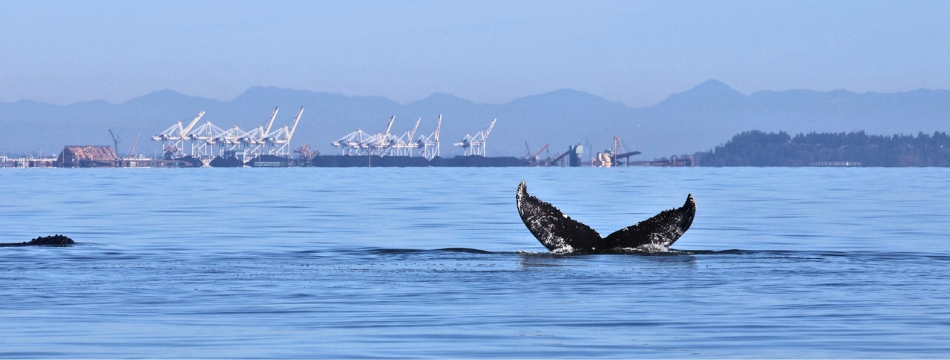
Image: Jade Baird
In addition , this project is going to heavily impact the Tsawassen band, which sits right on the shore adjacent to the Port. It will mean more noise, more pollution during build and more polution from shipping.
It is going to eat up more of our highly productive farmland meaning more expensive , less nutritious food since we will be relying on food being shipped heaven knows how far and given the state of food grown and processed n the US at the moment less safe and less nutritous. Food will be more expensive since it is being shipped heaven knows how far, again adding to more pollution from shipping.
This project being rushed through is going to just enrich big oil companies, mainly foreign owned, while the populous who are already are suffering from high cost of living are going to pay disproportionatly for it.
Mr. Carney needs a reality check in my opinion. He and his cohorts are pushing our environment and us over the cliff.